The right to opacity
Aircraft cable, grip-locks, birch plywood, textiles
10 ft. x 8 ft. x 6 ft.
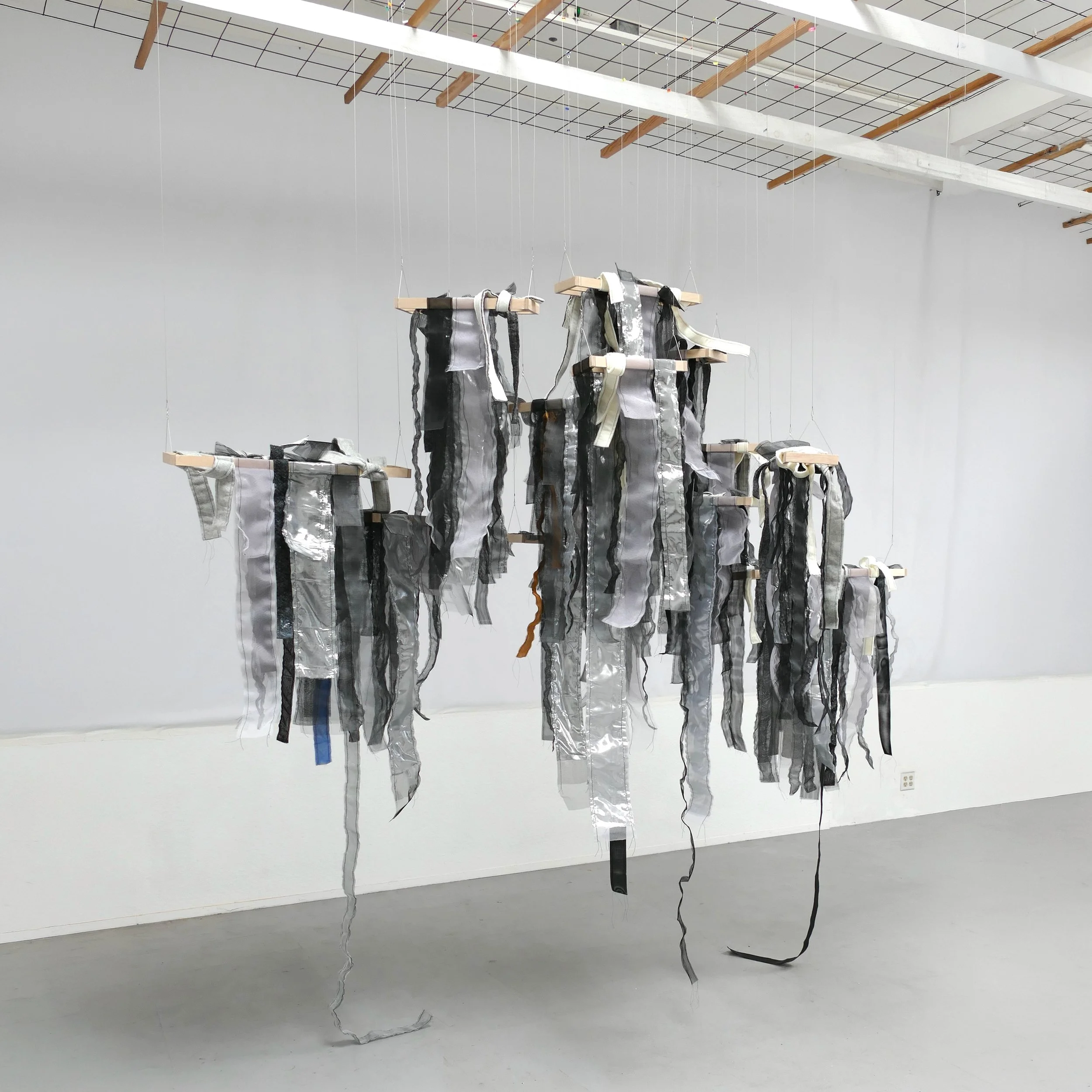
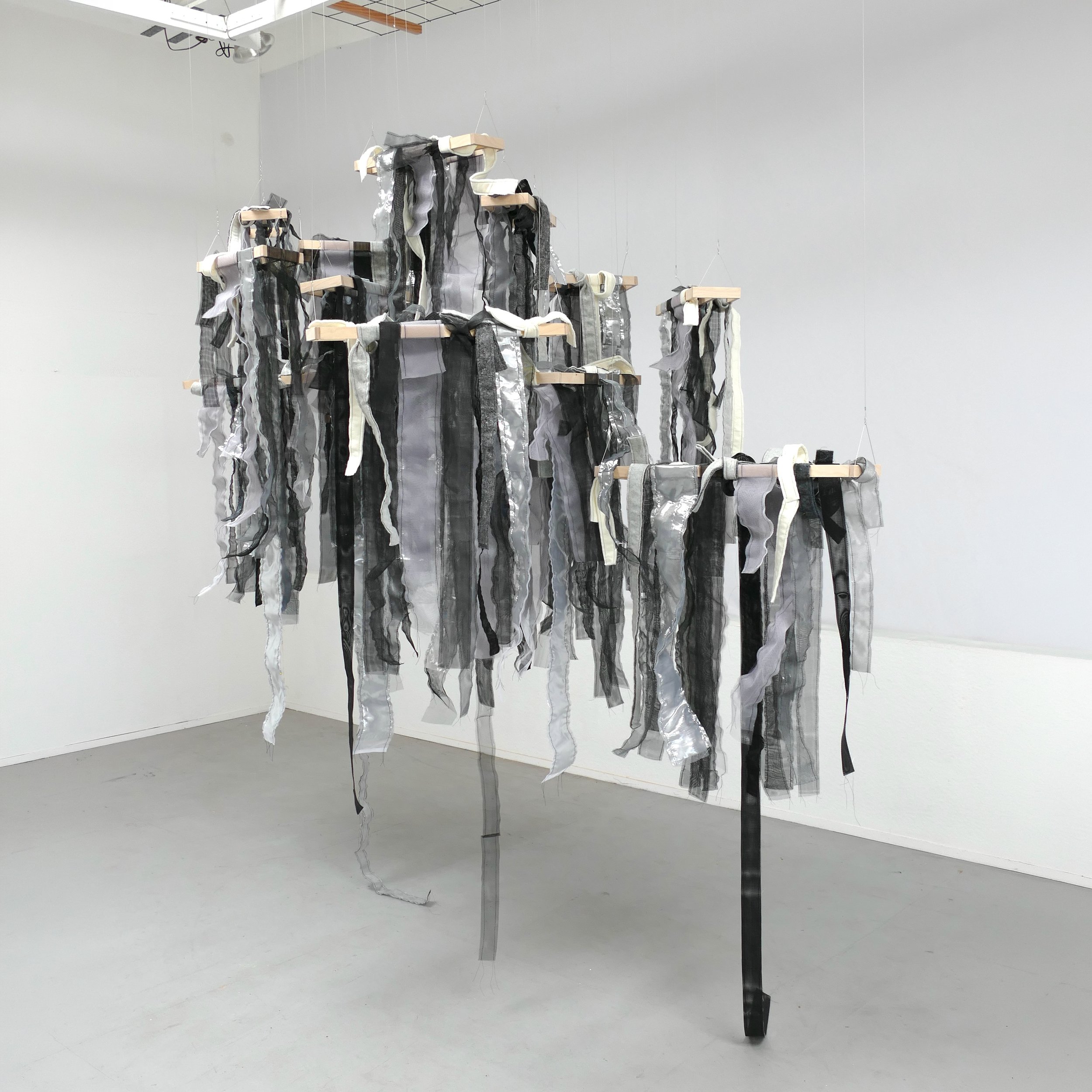
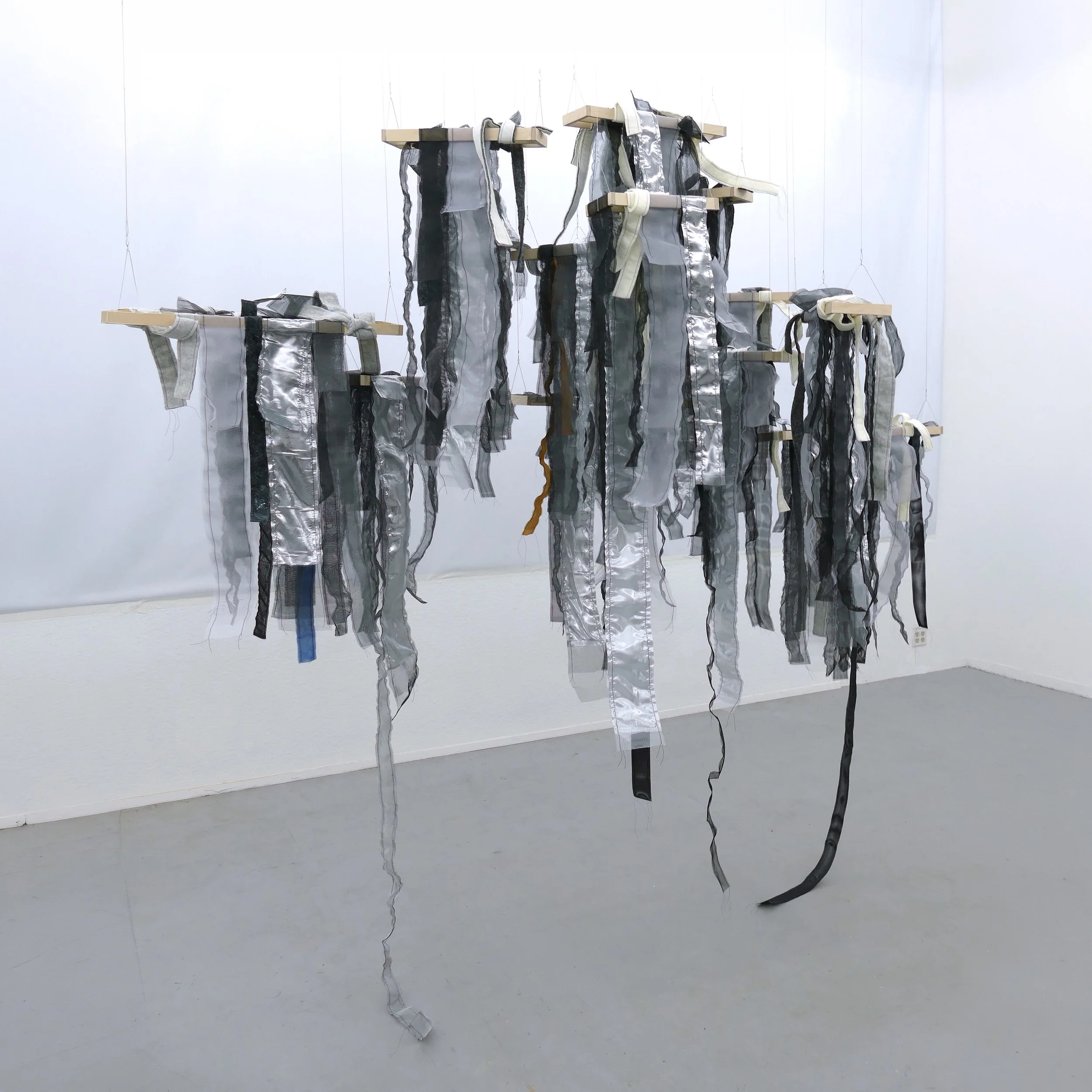
Fifteen flat panels, each 7 in. x 16 in. x 2 in. in four tiered rows with tied, sewn, and knotted translucent metallic textiles. Each is suspended from a ceiling grid, the fabric on the lower sections trail to the floor, the middle sections dangle above the floor, and the highest sections hang 4 ft. above the floor. The fabric strips are extremely dense but also diaphanous because of their translucency. The imagery came from a claustrophobic dream. The title is based on a concept from the Martinican poet poet, novelist, and essayist Édouard Glissant, who calls for a “right to opacity,” which he explains as that which protects diversity. He also meant it to describe an attitude and the right of artists to not have to explain, to make the viewer or reader have to engage with the work in a more intimate way.